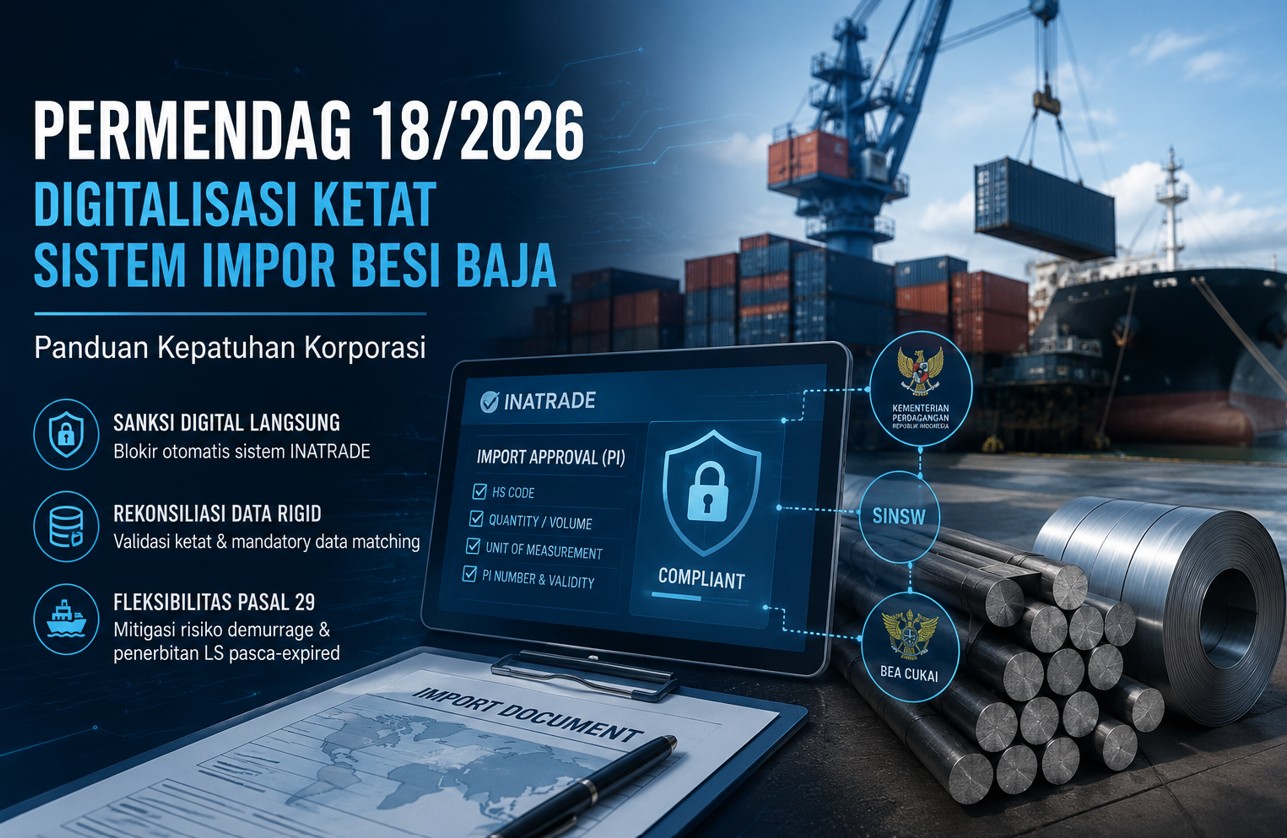
Permendag 18/2026: Stricter Digitalization of Steel Import Systems – A Corporate Compliance Guide
For CEOs and business leaders in Indonesia’s steel manufacturing industry, securing a reliable supply of raw materials such as billets, scrap metal, and machinery components from China is essential to maintaining plant uptime. The implementation of Minister of Trade Regulation (Permendag) No. 18 of 2026, an amendment to Permendag No. 16 of 2025, effective June 4, 2026, introduces systemic changes that must be carefully anticipated to ensure uninterrupted production operations.
The government is systematically transforming import supervision into a fully digital ecosystem. For businesses, this regulation establishes a new compliance standard that leaves little room for administrative oversight or reporting negligence.
1. Automatic INATRADE System Blocking (Direct Digital Sanctions)
The most critical aspect requiring the full attention of corporate management is the automation of administrative sanctions through the INATRADE system integrated with SINSW.
Warning Mechanism
If a company is late or fails to submit its Electronic Import Realization Report or Goods Distribution Report, the system will automatically issue a warning notification.
Permit Suspension (Locking)
The regulation grants a 30-day period from the date the warning is issued for the company to fulfill its reporting obligations. If the deadline is exceeded, the system will automatically block the importer’s INATRADE account, resulting in the suspension of import permits and the automatic rejection of any new Import Approval (PI) applications.
These sanctions are enforced systematically through the government’s digital database algorithms. Failure to submit reports for a single shipment cycle may effectively lock all steel import activities conducted by the company.
2. Rigid Data Reconciliation (Mandatory Data Matching)
Permendag 18/2026 strengthens data validation between the Import Approval (PI) database maintained by the Ministry of Trade and Customs Declaration documents processed by Indonesian Customs. The digital system will automatically cross-check the following elements:
- Tariff Classification / HS Code.
- Quantity, volume, and unit of measurement.
- PI document number and validity period.
Steel imports shipped in bulk are particularly vulnerable to weight discrepancies between the loading port in China and the discharge port in Indonesia. Under the new regulation, inconsistencies in quantity or unit data may directly result in customs clearance documents being held at the port.
3. Mitigating Demurrage Risks Through the Flexibility of Article 29
At the same time, the regulation provides a fair operational safeguard for businesses through Article 29 paragraphs (6a), (6b), and (6c), addressing vessel delays caused by adverse weather conditions or port congestion.
Issuance of LS After PI Expiration
Surveyors are legally permitted to issue a Surveyor Report (LS) even if the importer’s PI has expired by the time the vessel arrives in Indonesia.
BC 1.1 Requirement
This flexibility may be applied provided that Technical Verification has been completed at the port of loading in China, and the vessel’s arrival date can be proven to fall within the PI validity period based on the BC 1.1 Manifest documentation.
Maintaining Compliance with TCI
The accuracy of customs data has become a critical factor in ensuring the smooth flow of logistics throughout the upstream and downstream steel industry supply chain. As a compliance partner, PT Transcon Indonesia (TCI) is committed to supporting your company’s compliance management efforts.
Through the integration of Bonded Logistics Center (PLB) facilities and extensive expertise in customs regulations, we help ensure that all import documentation and synchronization processes align seamlessly with the government’s digital ecosystem in a secure and efficient manner.