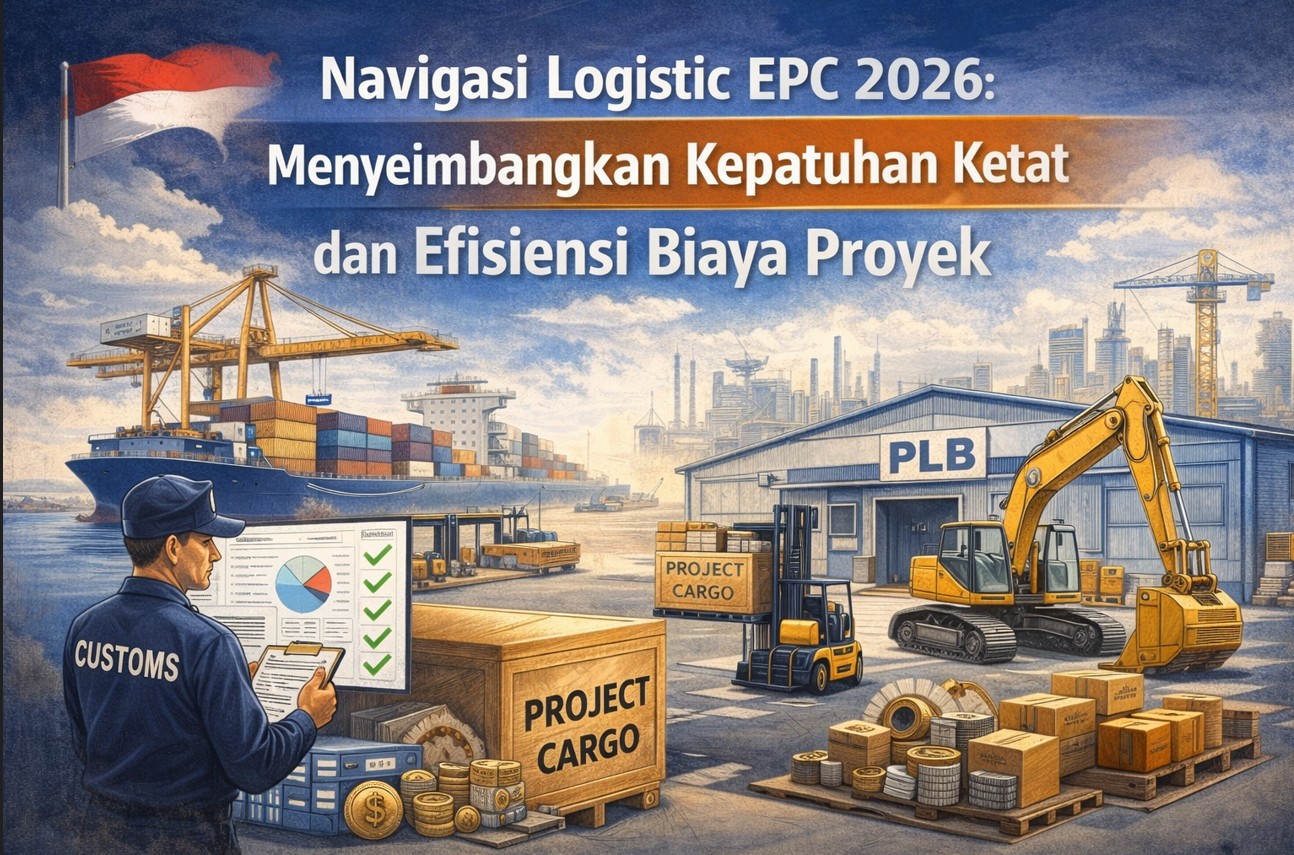
Navigating EPC Logistics in 2026: Balancing Stricter Compliance with Project Cost Efficiency
Indonesia’s logistics landscape in early 2026 presents new challenges that demand adaptive strategies.
Following global manufacturing peaks such as Lunar New Year, project cargo volumes at major ports often fluctuate sharply.
At the same time, the Indonesian government continues strengthening import compliance instruments—such as Permendag 47/2025—to ensure greater transparency and governance in trade.
For EPC (Engineering, Procurement, and Construction) players, this creates a strategic dilemma:
How can projects remain fully compliant with deepening technical regulations without compromising schedules and cost efficiency?
Aligning Compliance and Efficiency
Stricter import supervision—including Surveyor Reports (LS), SNI compliance, and Masterlist validation—is intended to improve long-term logistics governance.
However, document processing takes time.
If project cargo remains at the port during administrative completion, demurrage costs accumulate—raising total logistics expenses.
Compliance without planning can lead to inefficiency.
Bonded Logistics Centers (PLB): A Strategic Middle Ground
Bonded Logistics Centers (PLB) serve as officially recognized transitional zones that help balance compliance and efficiency.
PLB is not merely storage—it is a fiscal and operational instrument:
-
Cargo can be transferred from the port immediately upon arrival.
-
SNI verification, LS completion, or Masterlist adjustments can be finalized outside the high-cost port environment.
-
Import duties and taxes can be deferred, supporting project cash flow.
-
Port congestion and dwelling time can be reduced.
PLB functions as a strategic buffer within EPC project ecosystems.
Building Supply Chain Resilience
In 2026, supply chain resilience is defined not only by delivery speed—but by administrative agility.
Using customs facilities such as PLB ensures projects remain compliant while protecting cost structure and timelines.
Efficiency is no longer an afterthought—it is engineered into the system.