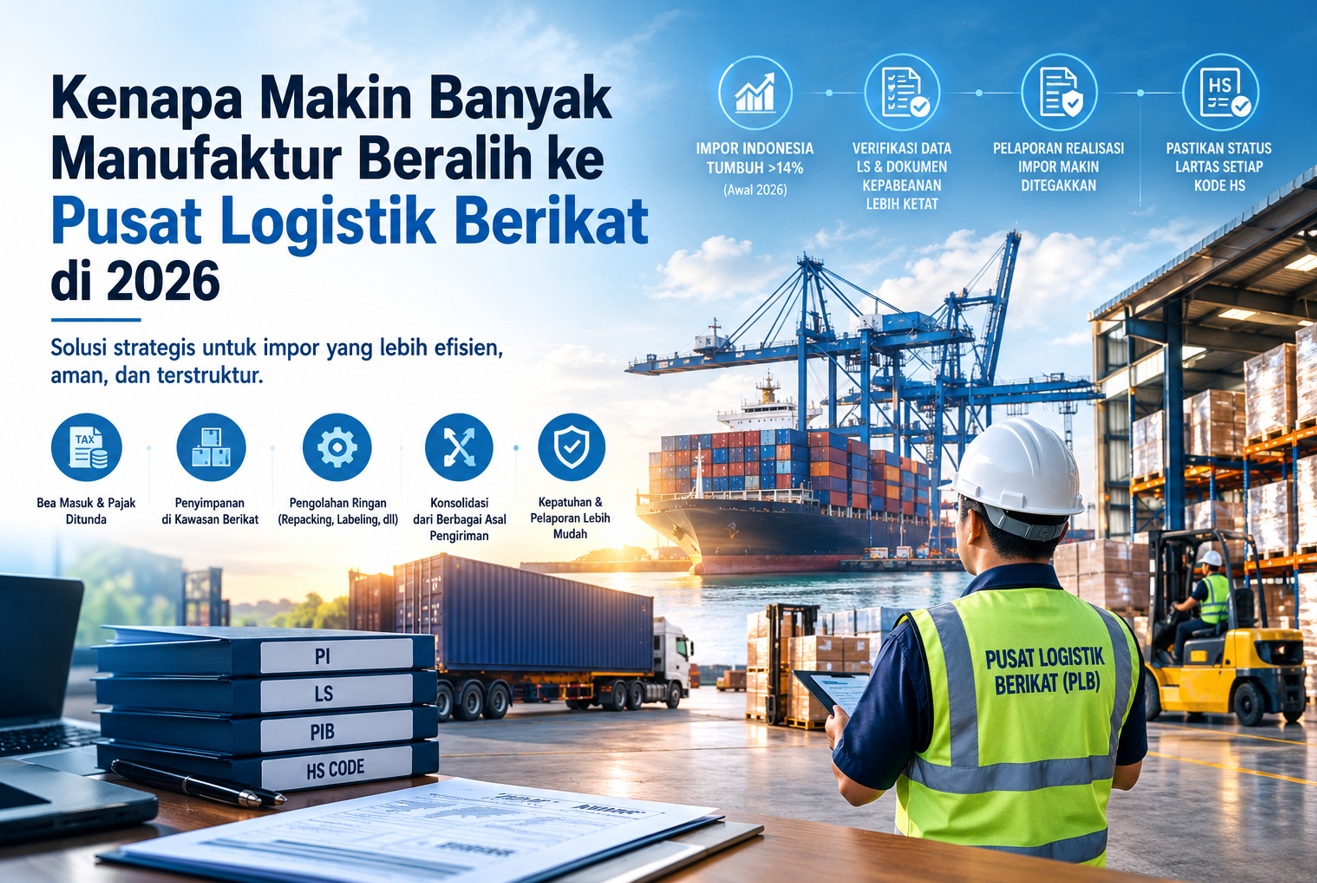
Why More Manufacturers Are Switching to Bonded Logistics Centers in 2026
Indonesian imports grew significantly in early 2026 — up more than 14% compared to the same period last year. At the same time, import regulations continue to be refined: data verification requirements between Surveyor Reports (LS) and customs documents are tightening, import realization reporting obligations are being more strictly enforced, and every HS code must now have its LARTAS status confirmed before goods are shipped.
For manufacturers, this doesn't mean imports become harder — it means they become more structured. And amid this increasing structure, many businesses are beginning to realize one thing: managing all of this themselves, from HS code classification to monthly reporting, consumes time and carries risks that could actually be transferred to those who specialize in this area.
This is where Bonded Logistics Centers (PLB) become an increasingly logical choice.
What does PLB actually offer?
PLB allows imported goods to be stored within a bonded zone without immediately paying import duties and taxes. Duties and taxes are only paid when goods are actually released for use or sale in the domestic market. For manufacturers who import raw materials in large volumes but use them gradually, this means the company's cash flow is no longer locked up in customs warehouses.
Beyond just deferred tax payments, PLB also provides operational flexibility. Goods can be stored, undergo light processing (such as re-packaging or relabeling), or even be consolidated from multiple shipment origins, before finally being released to the production line according to actual needs — not based on shipping schedules.
Why is it relevant right now?
As data matching requirements between LS, import permits, and customs documents become more detailed, even a small mismatch can mean costly delays. Experienced bonded logistics operators handle this every day — not something learned on the fly when goods are already piling up at the port.
The same applies to import realization reporting obligations, which are now under stricter oversight. When this process is managed by a bonded logistics partner that genuinely focuses on this area, manufacturers can redirect their full attention to production and sales — not to administrative deadlines.
Not about avoiding rules, but being ready to face them
It's important to emphasize: PLB is not a loophole to avoid import obligations. PLB is an official instrument actually designed by the government to support national supply chain efficiency while remaining within the same regulatory framework. What changes is who handles the administrative complexity — and when the payment obligation falls due.
For manufacturers who import regularly and in significant volumes, this is the right time to evaluate whether your current storage and customs model is still the most efficient way to operate.
PT Transcon Indonesia (TCI) helps manufacturers and importers manage this complexity through integrated Bonded Logistics Center services — from storage, customs handling, to reporting. Contact our team to discuss your supply chain needs.