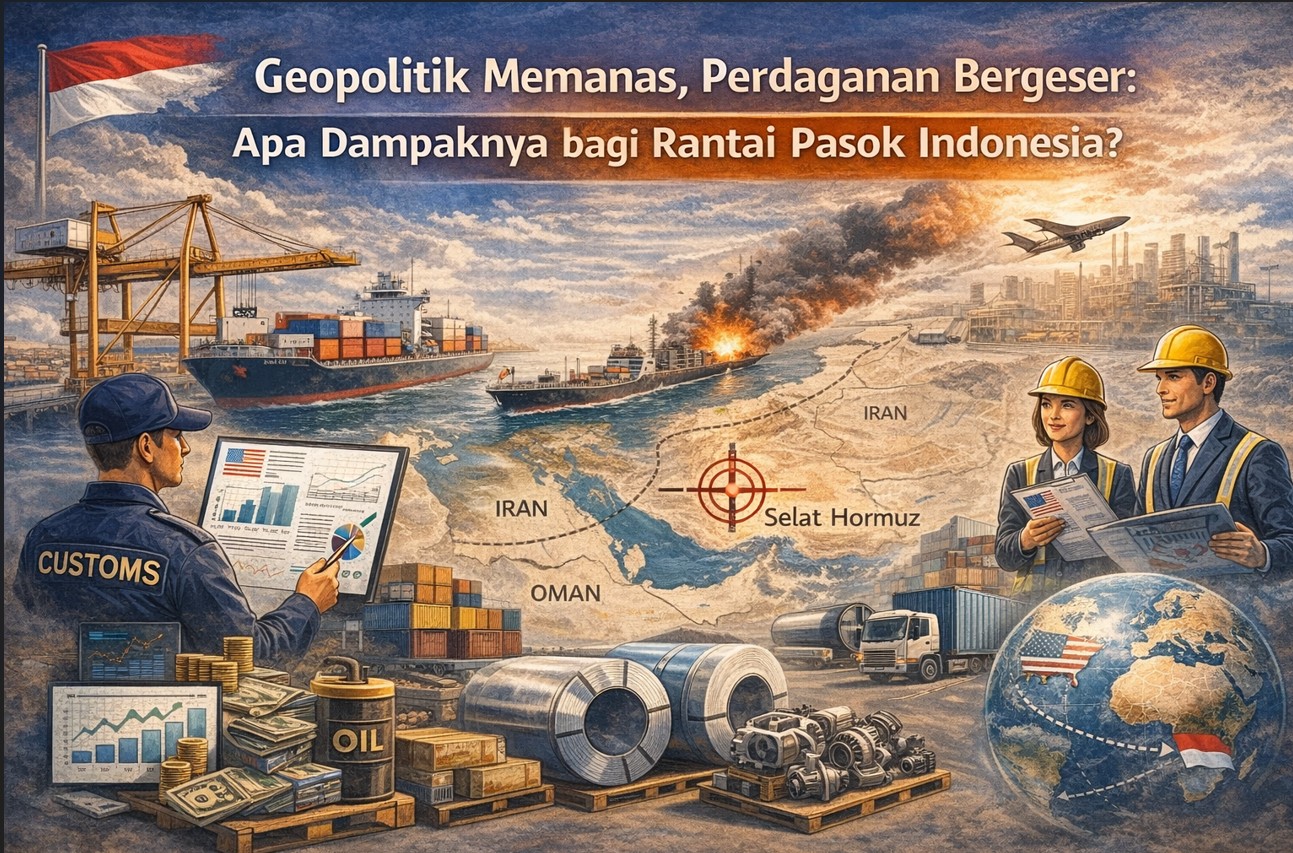
Geopolitics Rising, Trade Shifting: What It Means for Indonesia’s Supply Chain
Over the past few months, two global developments have begun reshaping international trade dynamics in ways that directly affect Indonesia’s industrial landscape.
First, escalating geopolitical tensions in the Middle East threaten the stability of global energy routes, particularly the Strait of Hormuz — one of the world’s most critical energy chokepoints. According to the IEA and EIA, approximately 20 million barrels of oil per day — over a quarter of global seaborne oil trade — pass through this corridor.
Second, evolving trade policies between Indonesia and the United States, including reciprocal trade agreements and ongoing tariff-related legal developments in the U.S., are reshaping export conditions.
Individually, these events appear separate. Combined, they create simultaneous pressure on logistics costs, supply stability, and export competitiveness.
For companies in energy, manufacturing, EPC, and commodities, this is a strategic inflection point.
Key Impacts on Indonesia’s Supply Chain
1️⃣ Energy and Logistics Cost Pressure
Indonesia remains dependent on Middle Eastern oil imports. Any instability may result in:
-
Rising global energy prices
-
Increased bunker fuel costs
-
Higher war risk insurance premiums
-
Rerouted shipping lanes and longer transit times
Energy inflation typically cascades into manufacturing and freight costs, compressing margins across industries.
2️⃣ Shifting U.S.–Indonesia Trade Dynamics
The U.S. remains a key export destination for Indonesia, with imports valued around USD 34 billion in recent years.
Reciprocal trade frameworks may offer improved access, but also introduce:
-
Tariff adjustments
-
Stricter compliance audits
-
Tightened rules of origin
-
Supply chain realignments
Exporters must enhance documentation discipline and sourcing flexibility.
The Most Exposed Cargo Categories
-
Energy & petrochemical inputs
-
Industrial machinery and spare parts
-
Steel and automotive components
-
Electrical systems
These inputs directly affect operational continuity rather than retail pricing.
Strategic Response: From Reactive to Adaptive
Companies cannot control geopolitical developments — but they can control:
-
Inventory structure
-
Logistics flexibility
-
Customs strategy
-
Real-time data visibility
Bonded logistics solutions, including bonded logistics centers (PLB), provide flexibility in managing imported goods before domestic release, optimizing cash flow and reducing exposure to regulatory or market shocks.
In an increasingly fragmented global trade environment, resilience is the new competitive advantage.