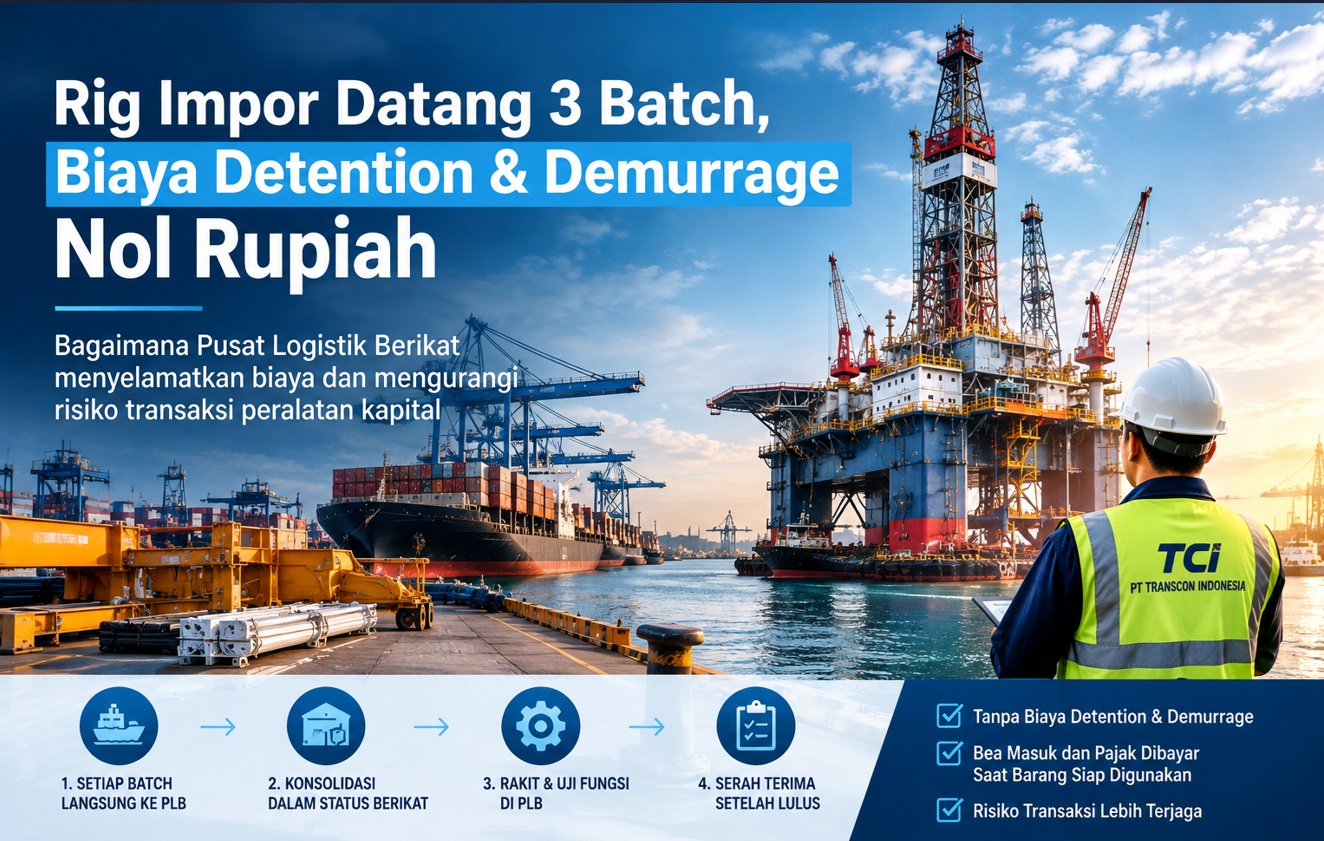
Drilling Rig Arrives in 3 Batches, Zero Detention and Demurrage Charges
How a Bonded Logistics Center saves costs and reduces transaction risk for high-value equipment
Imagine you've just purchased a drilling rig worth millions of dollars. The equipment comes from abroad, shipped across multiple vessels, paid via Letter of Credit. Then comes a question that keeps your procurement and finance teams awake
"Do we have to pay all import fees before we even know this rig actually works?"
For years, the answer was almost always "yes". Goods had to clear customs at the port, import duties and taxes paid, and only then could the rig be assembled and tested. If problems emerged, the money was already gone.
Recently, PT Transcon Indonesia (TCI) helped a national drilling contractor take a different approach. The result: the rig arrived in 3 batches over approximately 40 days, with zero rupiah spent on detention and demurrage charges. The rig was only handed over after passing functional tests.
The key lies in one facility that's often misunderstood the Bonded Logistics Center (PLB).
Problem One The Rig Never Arrives All at Once
A drilling rig isn't something that fits in a single container. It arrives as dozens of packages: mast, substructure, drawworks, mud pump, generator, and thousands of small components. These packages are often shipped in several batches, weeks apart.
Using the standard import pathway, the first batch that arrives must wait. It can't be assembled because other components haven't arrived yet. While waiting, costs keep accumulating: progressive port storage fees, detention charges for containers not yet returned, and demurrage for containers held at the terminal.
Over a 40-day span from first to last batch, these costs can accumulate into painful figures. Worse, none of this adds value to the rig. It's purely the cost of waiting.
Problem Two Paying Before It's Proven
The bigger problem comes after all batches arrive. Through the standard pathway, the rig must go through full customs clearance before assembly. This means import duties and taxes are already paid upfront.
Only then is the rig assembled and tested. If functional testing reveals defects, the buyer faces a difficult position: the money for import duties and taxes is already spent, the goods now have "entered" Indonesia making return to the seller complicated and expensive, and negotiating power with the seller weakens because the goods are already in the buyer's possession.
For equipment worth millions of dollars, this risk is no small matter. This is why many buyers want one simple thing: prove it works first, then take possession.
Real Case Study 3 Batches, 40 Days, Zero Detention and Demurrage
The national drilling contractor we supported faced both problems simultaneously. The rig came in 3 batches over approximately 40 days, paid via LC. Here's what we did together.
Step 1 Each batch moves directly to PLB
As soon as the first batch arrives at the port, goods are immediately transferred to TCI's PLB. Containers can be unpacked and returned without waiting for the next batch. Detention and demurrage charges stop from day one.
Step 2 Consolidation in bonded status
Over 40 days, batch after batch is collected at PLB. Import duties and taxes don't need to be paid yet.
Step 3 Assembly and functional testing at PLB
Once all components are complete, the rig is assembled and undergoes functional testing within PLB. Buyer and seller can directly observe whether the rig performs according to specifications.
Step 4 Handover only after passing tests
The rig is only handed over after functional testing succeeds. Only then is it released from PLB, import duties and taxes are paid, and the rig is sent to the operation site.
The Comparison Is Simple
Bottom Line
No detention or demurrage charges paid, and the buyer receives a rig that's already proven to work.
Everyone Wins, Not Just the Buyer
What's interesting about this arrangement: PLB remains neutral. It becomes a neutral space where transactions are settled fairly.
For the buyer, the risk of paying for untested goods disappears. Non-productive port costs also vanish. Cash flow improves, because import duties and taxes are only paid when the rig is truly ready for use.
For the seller, there's a clear and objective handover point: the rig passes functional testing in front of both parties. No more lengthy disputes after delivery about whether damage occurred during shipping or originated at the factory.
For banks and LC structures, functional testing at PLB can be a strong supporting document in payment structures. Buyer and seller can agree to a functional testing certificate as one requirement, fitting the transaction needs.
PLB is not just a warehouse that defers taxes. PLB is a safe space to complete transactions involving high-value equipment.
Not Just Rigs
The same pattern applies to nearly all capital equipment that arrives in stages and needs testing before acceptance. Some examples in the oil and gas and energy industries
- Gas compressors and turbine packages.
- Large-capacity generators and electrical equipment.
- Cranes, winches, and offshore lifting equipment.
- Specialized drilling equipment, including for non-conventional oil and gas development.
- Process skids and production facility modules.
Two main requirements: the equipment must be imported because it's not yet available domestically, and testing must be functional testing that can be performed within PLB facilities.
Prove It First, Then Hand It Over
With high national oil and gas production targets, every delayed day and every unnecessary rupiah spent matters. Drilling contractors and oil and gas companies don't have to choose between speed and transaction security anymore.
Three batches. Forty days. Zero detention and demurrage charges. A rig proven to work before handover. That's what can be achieved when customs procedures are designed as part of procurement strategy, not just administrative work at the end.
Planning to import a rig, compressor, or other capital equipment? PT Transcon Indonesia's team is ready to help design the flow from port, through PLB, functional testing, to the operation site. Let's discuss before your goods set sail.